
Start your EVOTECH request in under a minute.

Commercial Low Voltage Cabling Richmond TX
Professional, reliable installation for homes and businesses across Katy, Houston, and the surrounding areas — clean workmanship, clear communication, and a fast, free quote.
Why customers choose EVOTECH IT LLC
Customers are not only looking for a company name. They are looking for proof that the company can perform the exact work, is truly local, has real examples, and understands the technical details.
- Exactly what we do: Commercial Low Voltage Cabling Richmond TX — installed properly, tested, and done right.
- Local relevance: service area includes Katy, Houston, Sugar Land, Cypress, Richmond, Fulshear, Brookshire, and West Houston.
- Proof of work: real project photos, documented installations, and verifiable local reviews.
- Professional depth: testing, documentation, programming, calibration, and warranty-quality workmanship where it applies.
- Easy to reach: a clear phone number, quote form, and a real local business you can verify.
EVOTECH position
“Katy/Houston expert for low-voltage, network cabling, access control, cameras, AV, and business technology installation.”
Professional, insured, and business-ready installation standards
Clean workmanship, labeled installation, and final testing on applicable systems
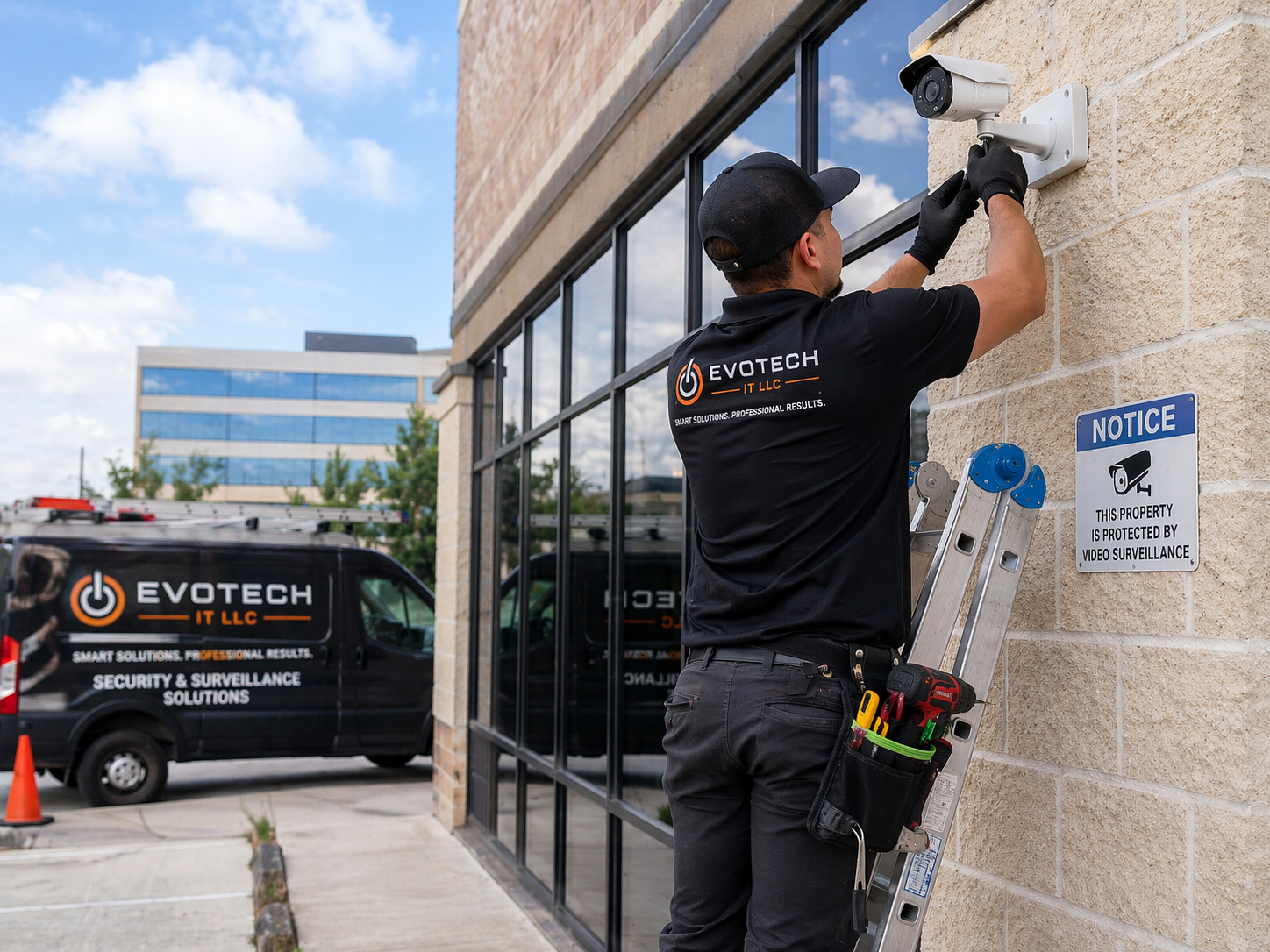
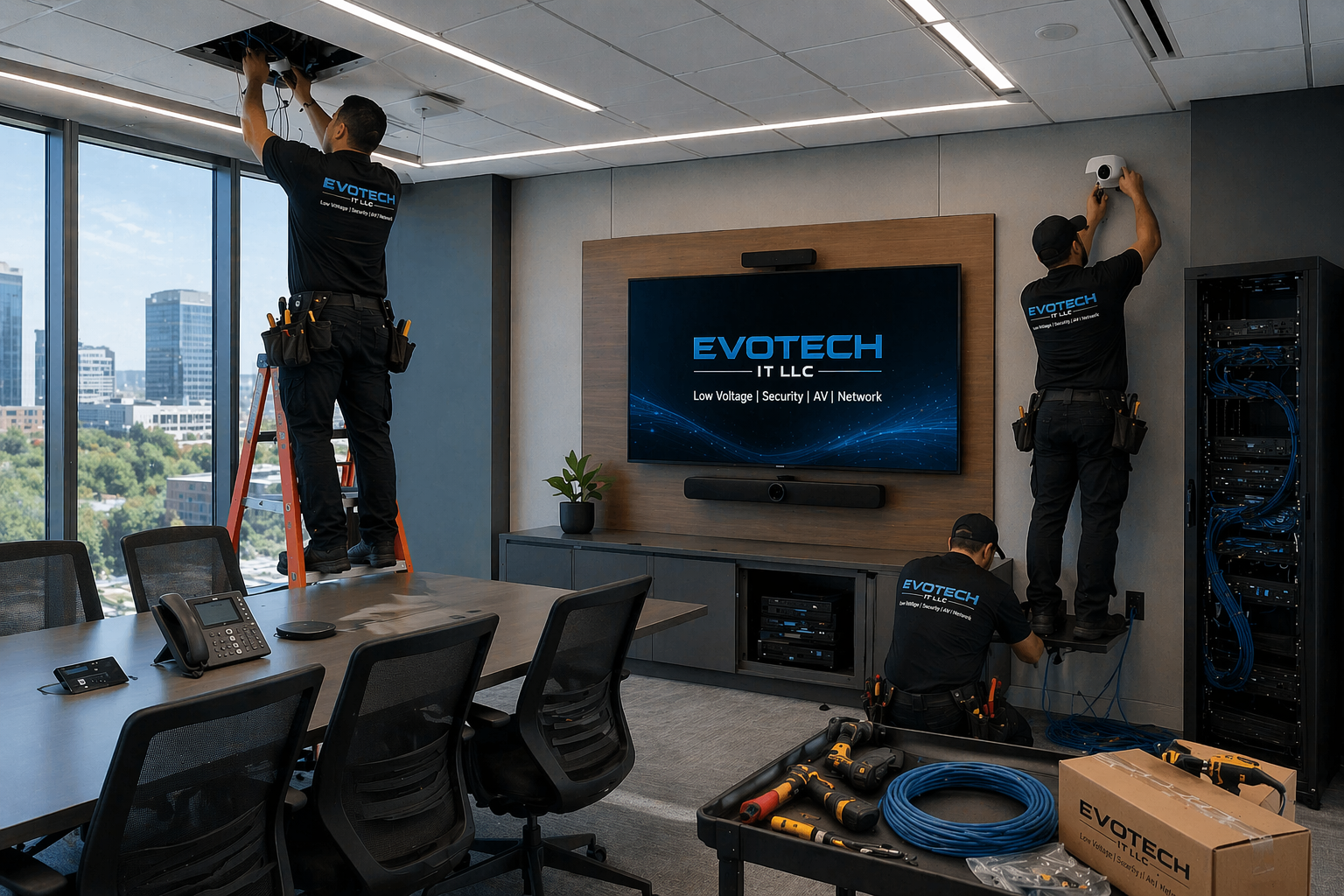
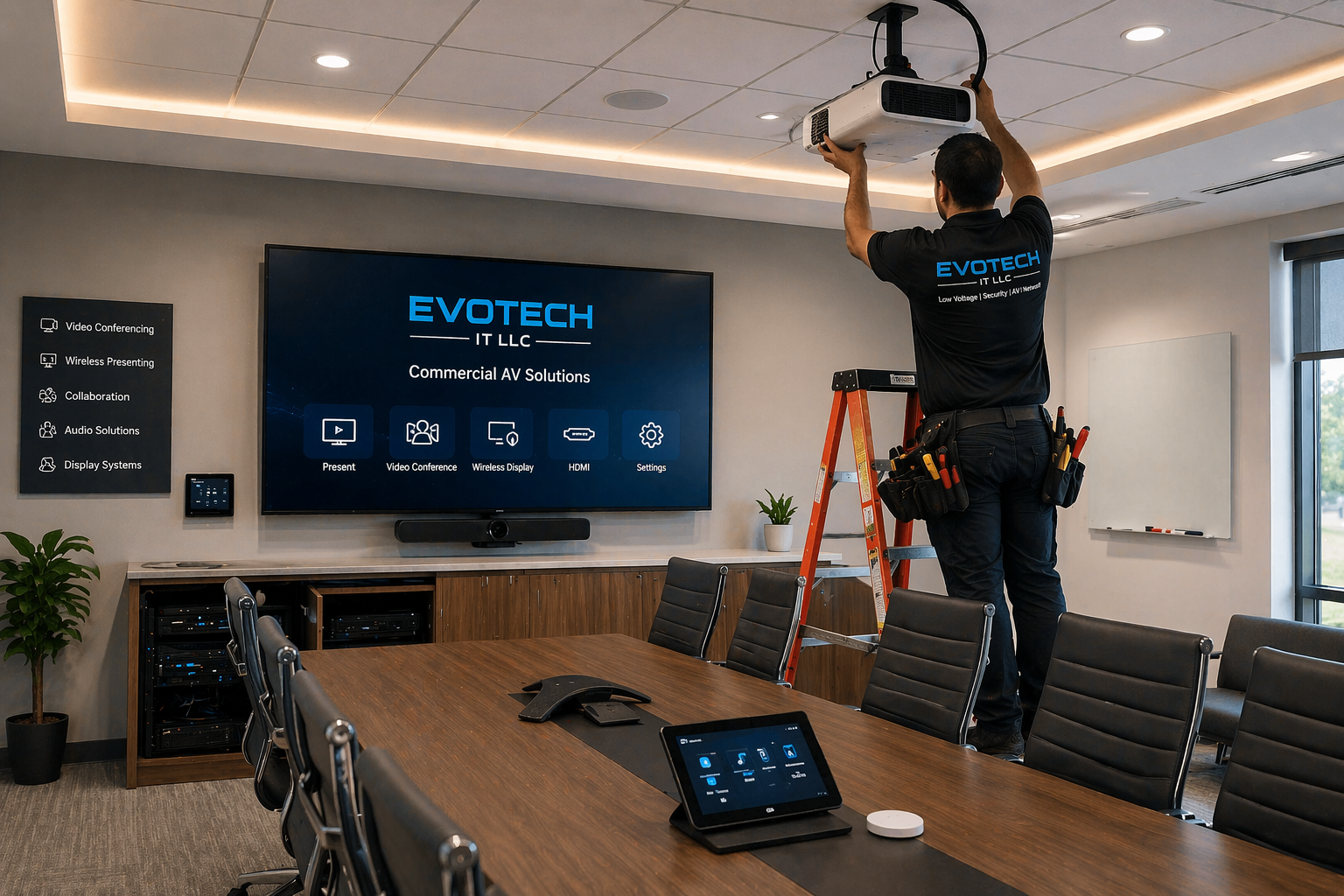
Real project photos and visual proof
Recent EVOTECH IT LLC installations from around the Katy and Houston area.

Professional scope for network cabling
- Cat6/Cat6A cable planning and clean routing
- Wall plates, keystones, patch panel termination, and rack organization
- Labeling, cable management, and pass/fail testing when applicable
- Network closet cleanup and business-ready documentation
Core EVOTECH services
- Cat6 cable installation
- Cat6 cabling
- Cat6 wiring
- Cat6 network cabling
- Cat6 Ethernet installation
- Cat6 Ethernet wiring
- Cat6 data cabling
- Cat6 data drops
- Cat6 network drops
- Cat6 wall jack installation
- Cat6 outlet installation
- Cat6 keystone jack installation
- Cat6 RJ45 termination
- Cat6 cable termination
- Cat6 patch panel termination
- Cat6 patch panel installation
- Cat6 cable testing
- Cat6 cable certification
- Cat6 pass/fail testing
- Cat6 cable labeling
- Cat6 cable management
- Cat6 rack cleanup
- Cat6 network rack wiring
- Cat6 structured cabling
- Cat6 low-voltage wiring
- Cat6 office cabling
- Cat6 commercial cabling
- Cat6 residential cabling
- Cat6 home network wiring
- Cat6 business network cabling
- Cat6 network upgrade
- Cat6A cable installation
- Cat6A cabling
- Cat6A Ethernet wiring
- Cat6A data drops
- Cat6A patch panel termination
- Cat6A cable testing
- Cat6A structured cabling
- Ethernet cable installation
- Ethernet wiring
- Ethernet data drops
- Ethernet wall jack installation
- Ethernet outlet installation
- Ethernet cable termination
- Ethernet patch panel installation
- Ethernet cable testing
- Network cable installation
- Network cabling
- Network wiring
- Network data cabling
- Network drop installation
- Data cable installation
- Data cabling
- Data wiring
- Data jack installation
- Data outlet installation
- Data drop installation
- Structured cabling
- Structured wiring
- Low-voltage cabling
- Low-voltage wiring
- Commercial low-voltage cabling
- Business low-voltage wiring
- Office network cabling
- Office data cabling
- Office Ethernet wiring
- Commercial network cabling
- Commercial data cabling
- Business network cabling
- Business Ethernet installation
- Small business network cabling
- Retail store network cabling
- Warehouse network cabling
- Medical office network cabling
- Restaurant network cabling
- Church network cabling
- School network cabling
- Dental office network cabling
- Real estate office network cabling
- Conference room network cabling
- Reception desk data drops
- POS network cabling
- Point of sale cabling
- Printer network cabling
- VoIP phone cabling
- Business phone cabling
- IP phone cabling
- WiFi access point cabling
- Wireless access point wiring
- Ceiling access point cabling
- Ubiquiti access point cabling
- UniFi access point cabling
- Security camera Cat6 cabling
- IP camera network cabling
- PoE camera cabling
- NVR network cabling
- Access control network cabling
- Door reader cabling
- Intercom network cabling
- Smart TV Ethernet wiring
- Home theater Ethernet wiring
- Gaming room Ethernet wiring
- Home office Ethernet wiring
- Server room cabling
- IT closet cabling
- Network closet cabling
- MDF cabling
- IDF cabling
- Patch panel cleanup
- Network rack installation
- Network rack organization
- Cable tray installation
- J-hook cabling
- Conduit network cabling
- Plenum Cat6 cabling
- Riser Cat6 cabling
- In-wall Ethernet wiring
- Attic Ethernet wiring
- Ceiling Ethernet wiring
- New construction network wiring
- Remodel network wiring
- Office buildout cabling
- Tenant improvement cabling
- Network cable troubleshooting
- Ethernet cable repair
- Cat6 cable repair
- Network jack repair
- Data jack repair
- Bad cable replacement
- Old network cable replacement
- Network cable tracing
- Tone and test network cable
- Label and test data cables
- Cable pathway planning
- Network infrastructure installation
What to look for when hiring an installer
Business identity
Real local service area, real phone number, real website, business email/domain, and clear company name.
Proof of work
Real photos, before-and-after examples, and a real project portfolio.
Reputation
Google reviews, recent customer feedback, and verified local business profiles.
Professional process
Testing, certification, programming, calibration, documentation, labeling, and final walkthrough when applicable.
Safety and risk
Licensed and insured, with a clear warranty, quality workmanship, and a code-aware approach.
Fast response
A clear call button, text/quote form, email, and direct contact for urgent installs.
Find & verify EVOTECH IT LLC online
These links help visitors verify the business across places where consumers commonly check before hiring a contractor, installer, or service provider.
Company trust links
Manufacturers & platforms we work with
What separates a real pro from a handyman?
- They speak in trade-specific terms and explain the installation path clearly.
- They document the scope, parts, wiring, equipment, programming, and handoff.
- They test, label, calibrate, or verify the system before calling the job complete.
- They show real proof: reviews, project photos, local listings, and direct contact information.
Questions to ask before hiring
- Do you handle the full installation or only part of it?
- Do you provide testing, certification, calibration, or final walkthrough?
- Can you show real photos of similar work?
- Do you provide an onsite quote and written scope?
Request a quote for Commercial Low Voltage Cabling Richmond TX
Tell EVOTECH what you need installed, how many drops, doors, cameras, rooms, TVs, phones, or access points, and whether this is residential or commercial.
FAQ
What is Cat6 installation and why is it important for homes and businesses?
Cat6 installation is the professional process of running Category 6 Ethernet cable through a home, office, retail space, warehouse, medical office, or commercial building to create a fast, stable, and reliable wired network. Cat6 cable is commonly used for internet connections, network switches, routers, Wi-Fi access points, security cameras, business phones, smart TVs, access control systems, point-of-sale systems, computers, printers, servers, and other connected devices. For many homes and businesses in Katy, Houston, Cypress, Sugar Land, Richmond, Fulshear, and surrounding areas, Cat6 cabling is one of the most important parts of building a strong technology foundation. Many people rely only on Wi-Fi, but Wi-Fi is not always enough. Wireless connections can be affected by walls, distance, interference, weak router placement, metal structures, crowded networks, and too many connected devices. Cat6 installation solves many of these problems by creating direct wired connections. A wired Cat6 connection is usually more stable than Wi-Fi, has lower latency, and is better for devices that need consistent performance. This is especially important for businesses that depend on cloud software, video calls, security systems, payment processing, VoIP phones, cameras, and daily internet access. For a business, Cat6 installation is not just about getting internet to one computer. It is about building a professional network infrastructure. A proper Cat6 installation usually includes planning the cable routes, installing data drops in the right locations, terminating cables into wall plates, connecting cables into a patch panel, organizing the network rack, labeling each cable, testing each line, and making sure everything is clean and ready for use. This is why hiring a professional Cat6 installer matters. A handyman may be able to pull cable, but a real network cabling installer understands cable management, signal quality, network closets, patch panels, switches, access points, cameras, and future expansion. For homes, Cat6 installation can make a major difference in daily life. Modern homes often have smart TVs, gaming systems, home offices, security cameras, Wi-Fi access points, streaming devices, smart home hubs, and audio/video systems. When everything depends on Wi-Fi, the network can become slow or unreliable. Installing Cat6 to key rooms gives homeowners strong wired connections where they matter most. A home office with a wired Cat6 connection can improve video meetings and remote work. A gaming room can get lower latency. A media room can stream with fewer interruptions. A security camera system can operate more reliably when the cameras are connected through proper network cabling. For commercial spaces, Cat6 cabling is even more critical. Offices need reliable data drops for desks, conference rooms, reception areas, printers, network equipment, and Wi-Fi access points. Retail stores need network cabling for point-of-sale stations, cameras, phones, inventory systems, and back-office computers. Warehouses may need Cat6 cabling for access points, cameras, office areas, and scanners. Medical and professional offices need organized cabling to support secure communication and daily operations. Poor cabling can cause downtime, dropped calls, weak Wi-Fi, camera failures, and frustrating network issues. A professional Cat6 installation also improves the appearance and safety of a property. Instead of loose cables running across floors, under rugs, or along walls, cables are routed cleanly through walls, ceilings, attics, conduits, or structured cabling pathways. The result looks better and reduces the risk of damage or tripping hazards. Clean cable management also makes future troubleshooting easier. When each cable is labeled and organized, it is much easier to identify which line goes to which room, device, camera, or office. Another benefit of Cat6 installation is future readiness. Technology keeps growing. Businesses add more devices, more cameras, more phones, more computers, more cloud services, and more wireless access points. A clean Cat6 network gives the property a stronger foundation for upgrades. Even if a customer does not need every cable immediately, installing the right network drops now can save time and money later. It is much easier to plan a proper cabling layout during a remodel, buildout, office move, or technology upgrade than to fix messy wiring after problems appear. For SEO and customer education, the key message is simple: Cat6 installation gives homes and businesses a faster, cleaner, more reliable network. It supports internet, Wi-Fi, cameras, phones, computers, access control, smart devices, and many other systems. Whether someone is building a new office, upgrading an old network, remodeling a home, setting up a security camera system, or improving Wi-Fi coverage, Cat6 cabling is often the hidden infrastructure that makes everything work better. EVOTECH IT LLC provides professional low-voltage and technology installation services for customers who need clean network cabling, Cat6 installation, structured cabling, Wi-Fi access point wiring, camera cabling, business phone cabling, and related technology solutions. For customers in Katy and the Houston area, the right Cat6 installation can turn a weak, messy, unreliable network into a clean and dependable system built for daily use.
How much does Cat6 installation cost in Katy, TX?
The cost of Cat6 installation in Katy, TX can vary depending on the property type, number of cable drops, cable length, wall and ceiling access, network closet location, attic access, commercial building conditions, patch panel needs, and whether the job includes testing, labeling, and rack cleanup. There is no single price that fits every Cat6 installation because every building is different. A small home office that needs one or two data drops is very different from a commercial office that needs twenty or fifty Cat6 lines installed, terminated, labeled, and connected to a patch panel. The first major factor is the number of drops. A “drop” usually means one Cat6 cable run from the network equipment location to a wall plate, ceiling access point, camera location, desk, TV area, phone location, or other device location. More drops require more cable, more labor, more termination work, more labeling, and more testing. A simple one-drop job may be quick, while a larger business installation may require planning, ladders, ceiling access, patch panels, rack organization, and multiple work areas. The second factor is cable routing difficulty. Some buildings are easy to cable because they have open ceilings, drop ceilings, accessible attics, crawl spaces, or clear pathways. Other buildings are more difficult because they have finished walls, high ceilings, insulation, fire blocks, concrete, metal studs, tight attic spaces, or limited access between rooms. Commercial buildings may require cable to be routed through ceiling grids, conduit, cable trays, or existing low-voltage pathways. The harder it is to route the cable cleanly, the more time the job may take. The third factor is whether the installation is residential or commercial. Residential Cat6 installation usually involves rooms, TVs, home offices, gaming areas, Wi-Fi access points, cameras, and media equipment. Commercial Cat6 installation may include office desks, conference rooms, reception areas, server/network closets, patch panels, racks, switches, printers, phones, cameras, access control, and Wi-Fi access points. Commercial work often requires a cleaner documentation process because business owners need to know where each cable goes and how the system is organized. The fourth factor is termination type. A professional Cat6 installer should not just pull cable and leave loose ends. The cable should be terminated properly using wall plates, keystone jacks, RJ45 connectors where appropriate, patch panels, and organized network hardware. In a business environment, cables should usually be terminated into a patch panel in the network closet or rack. This makes the network cleaner, easier to manage, and easier to troubleshoot. Patch panel work adds value, but it also adds labor and materials. The fifth factor is testing and labeling. A professional Cat6 installation should include testing each cable run to confirm that the line is working properly. At minimum, each line should receive a pass/fail test. For higher-level commercial work, the customer may request certification testing. Labeling is also important. Each wall plate and patch panel port should be labeled so the customer knows which cable belongs to which room, desk, camera, or device. This makes future support much easier and prevents confusion. The sixth factor is materials. Cat6 cable quality, plenum rating, riser rating, wall plates, keystone jacks, patch panels, cable management, conduit, surface raceway, rack accessories, and network hardware can all affect total cost. In some buildings, plenum-rated cable may be required depending on the air-handling space and code requirements. A professional installer can explain what type of cable is appropriate for the building. The seventh factor is whether additional services are included. Many customers request Cat6 installation as part of a larger project. For example, a customer may need Cat6 for Wi-Fi access points, security cameras, access control readers, business phones, smart TVs, audio/video systems, or network switches. If the installer is also mounting access points, installing cameras, setting up a network rack, configuring switches, or connecting VoIP phones, the project cost will be higher than simple cabling alone. However, bundling services can often make the job more efficient because the same low-voltage installer can plan everything together. For customers in Katy and the Houston area, the best way to get accurate Cat6 installation pricing is to request an onsite quote. Photos can help, but an onsite inspection is often better because the installer can see the cable paths, walls, attic, ceiling type, network closet, device locations, and any special conditions. A serious installer should ask how many drops are needed, where the modem/router is located, where the network equipment will be placed, what devices need wired connections, and whether the customer needs testing, labeling, or rack organization. Customers should be careful with extremely cheap Cat6 installation quotes. Low prices may not include professional termination, labeling, testing, wall plates, cable management, or clean workmanship. A low-cost installer might leave cables messy, unlabeled, or difficult to troubleshoot. That can create bigger problems later. The better question is not only “How much does Cat6 installation cost?” but “What exactly is included?” A professional quote should explain the number of drops, cable type, termination method, materials, testing, labeling, and cleanup. For SEO pages, a strong answer should avoid fake exact pricing unless the company has fixed pricing. Instead, explain the pricing factors clearly and invite the customer to request a quote. EVOTECH IT LLC can position itself as a professional Cat6 installer in Katy, TX by emphasizing clean work, real project planning, structured cabling, proper termination, labeling, testing, and support for homes and businesses. A good call to action would be: If you need Cat6 installation in Katy, Houston, Cypress, Richmond, Sugar Land, Fulshear, or nearby areas, contact EVOTECH IT LLC to request a free or fast onsite quote. The right Cat6 installation can improve internet reliability, Wi-Fi performance, security camera stability, business phone systems, and the overall technology setup of your home or business.
Should I hire a professional Cat6 installer or do it myself?
Many homeowners and business owners wonder whether they should hire a professional Cat6 installer or try to install Ethernet cable themselves. For very simple situations, a do-it-yourself approach may work. For example, if someone only needs to run one visible Ethernet cable from a router to a nearby computer, they may not need a professional. But for clean in-wall wiring, ceiling runs, commercial data drops, patch panel termination, security camera wiring, Wi-Fi access point wiring, business phone cabling, or multi-room network installation, hiring a professional Cat6 installer is usually the smarter choice. The biggest reason to hire a professional is clean cable routing. Running Cat6 cable properly is not just about pulling wire from one place to another. A good installer has to understand walls, ceilings, attics, cable pathways, studs, insulation, fire blocks, drop ceilings, conduits, and safe low-voltage practices. Poor cable routing can damage walls, create messy visible wiring, reduce signal quality, or make the installation look unprofessional. In a business, messy cabling can also create a bad impression for customers, employees, and future technicians. Another reason to hire a professional is proper termination. Cat6 cable performance depends on how the cable is terminated. The twisted pairs inside the cable must be handled correctly. If the cable is untwisted too much, punched down poorly, damaged, bent too sharply, or connected incorrectly, the line may fail or perform below expectations. A cable may appear to work at first but later cause slow speeds, dropped connections, camera problems, or network instability. Professional installers use proper keystone jacks, RJ45 connectors, patch panels, and tools to reduce these risks. Testing is another major difference between a professional installation and a DIY job. Many people install a cable and assume it works because a device connects. But that does not always mean the cable is installed correctly. A professional Cat6 installer should test the cable runs to verify that each line is wired correctly and ready for use. For commercial jobs, testing and labeling are extremely important. If a business has multiple drops, the customer needs to know which port belongs to which office, desk, camera, access point, or device. Without labels, troubleshooting becomes frustrating and time-consuming. Professional installers also understand network organization. In a home, this may mean clean wall plates, a structured media panel, and neat cable routing. In a business, it may mean a proper network rack, patch panel, cable management, switch placement, modem/router location, and labeled ports. This is important because the physical cabling is the foundation of the network. Even if the internet service is fast, bad cabling can create weak performance. A clean network closet makes upgrades and repairs easier. For businesses, hiring a professional Cat6 installer also reduces downtime and risk. Businesses depend on internet, phones, cameras, payment systems, printers, access control, cloud software, and Wi-Fi. A bad cabling job can affect daily operations. If an office network is poorly installed, employees may experience dropped calls, slow systems, weak Wi-Fi, camera outages, or connection failures. A professional installer can plan the network cabling around how the business actually operates, including desk locations, conference rooms, reception areas, printers, camera locations, and future expansion. For homeowners, hiring a professional can save time and protect the property. In-wall cable runs can be difficult without the right tools and experience. A professional can often install Cat6 more cleanly, with fewer wall cuts, better cable paths, and a more polished final appearance. This is especially useful for home offices, gaming rooms, media rooms, smart TVs, security cameras, and Wi-Fi access points. A clean Cat6 installation can make the home more functional and reduce reliance on weak wireless signals. There are also safety and code considerations. Low-voltage cabling is not the same as high-voltage electrical wiring, but it still needs to be installed correctly. Cables should not be run carelessly near electrical lines, through unsafe areas, or in ways that violate building requirements. Some commercial environments may require specific cable types, such as plenum-rated cable in certain air-handling spaces. A professional installer can help determine the right cable type and installation method for the property. Another important point is future growth. A DIY installer may only think about the immediate need: one cable to one room. A professional thinks about the whole system. Where will future access points go? Will cameras be added later? Does the business need more desk drops? Should the patch panel have extra capacity? Is the network closet in the right place? Should the cable be Cat6 or Cat6A? Is there a better route that will make future upgrades easier? This type of planning can save money later. However, customers should not hire just anyone. A real Cat6 installer should be able to explain the process clearly. Ask if they terminate into wall plates and patch panels. Ask if they label every line. Ask if they test every cable. Ask if they have experience with homes, offices, cameras, Wi-Fi access points, and business networks. Ask for project photos if available. A professional should not be offended by these questions. In fact, good installers expect them. A handyman may be cheaper, but the risk is that the job may not be properly tested, labeled, or organized. A real low-voltage installer brings more value because they understand the systems that depend on the cabling. Cat6 is used for more than internet. It may support cameras, access control, phones, AV systems, smart devices, and Wi-Fi. That is why the installation should be treated as infrastructure, not just a wire. EVOTECH IT LLC can use this message strongly: Hiring a professional Cat6 installer gives customers cleaner work, better performance, easier troubleshooting, better network organization, and stronger long-term value. For homes and businesses in Katy, Houston, Cypress, Richmond, Sugar Land, Fulshear, and nearby areas, a professional Cat6 installation is one of the best investments for reliable technology.
What should I look for in the best Cat6 installer near me?
When searching for the best Cat6 installer near you, it is important to look beyond the cheapest price. Cat6 cabling is the foundation of your network. If it is installed poorly, you may experience slow internet, dropped connections, weak Wi-Fi access points, camera failures, VoIP phone problems, messy wiring, and difficult troubleshooting. The best Cat6 installer should be professional, local, experienced, organized, and able to explain exactly what is included in the job. The first thing to look for is exact service match. The company should clearly offer Cat6 installation, Cat6A cabling, network cable installation, data drops, structured cabling, patch panel termination, and low-voltage wiring. If the company only says “general handyman” or “we do everything,” that may not be enough. A true Cat6 installer should understand network cabling as a specialty. They should know the difference between basic cable pulling and professional structured cabling. The second thing to check is local relevance. If you are in Katy, TX, you want a company that clearly serves Katy, Houston, Cypress, Richmond, Sugar Land, Fulshear, Brookshire, Cinco Ranch, and surrounding areas. Local service matters because the installer understands the area, can provide onsite quotes, and can respond faster if you need support. A company that has local pages, local photos, local reviews, and a clear service area is usually a stronger choice than a company with a generic national-looking website. The third thing to look for is proof of work. The best Cat6 installers show real project photos, network racks, patch panels, wall plates, cable runs, access points, camera wiring, and before/after examples. Real photos help customers trust the company. Stock photos can make a website look nice, but real work photos prove that the company actually does the job. If the company has a gallery, project page, Google Business photos, Facebook photos, or Instagram posts showing real installations, that is a good trust signal. The fourth thing to check is reviews. Google reviews are especially important because they show how past customers describe the company’s work. Look for reviews that mention professionalism, clean installation, communication, punctuality, problem-solving, and quality. Recent reviews matter more than old reviews because they show the company is active now. A company with only old reviews or no reviews may still be good, but it has less public proof. The fifth thing to look for is professional language. A serious Cat6 installer will talk about data drops, cable testing, labeling, patch panels, keystone jacks, wall plates, network racks, cable management, Wi-Fi access points, switches, and structured cabling. This language shows that they understand the work. If an installer cannot explain whether they test the cable, label the drops, or terminate into a patch panel, that is a warning sign. The sixth thing to ask about is testing. Every Cat6 line should be tested after installation. For small jobs, a pass/fail test may be enough. For larger commercial jobs, cable certification may be requested. Testing helps confirm that the cable is wired correctly and ready for use. Without testing, customers may not know whether the line is reliable. A cable might connect but still have performance problems if it was damaged or terminated poorly. The seventh thing to ask about is labeling. In a professional installation, each cable should be labeled at the wall plate and at the patch panel or network closet. Labeling is extremely important for businesses because multiple data drops can become confusing quickly. If a future technician needs to troubleshoot the network, labeled cables save time and money. Unlabeled cables create frustration and make the system look unprofessional. The eighth thing to check is whether the company can handle related systems. Many Cat6 projects are connected to other technology needs. A customer may need Cat6 for security cameras, Wi-Fi access points, access control, business phones, smart TVs, audio/video systems, or office computers. A stronger installer can understand how all these systems work together. This is especially valuable for businesses that want one company to handle cabling, cameras, phones, Wi-Fi, and low-voltage installation. The ninth thing to look for is clean workmanship. Cat6 installation should not leave a mess. Cables should be routed neatly, secured properly, terminated cleanly, and organized in the network area. Wall plates should look professional. Network racks should not look like tangled spaghetti. Clean work matters because it affects reliability, appearance, and future serviceability. A clean installation also tells the customer that the company cares about quality. The tenth thing to consider is business fit. Some companies are great for small residential jobs. Others are better for large commercial projects. Some are enterprise-level contractors that may be too expensive for a small home job. The best choice depends on your project. A homeowner installing a few Cat6 drops may need a local low-voltage installer. A business building out a large office may need a structured cabling contractor with patch panel experience, documentation, testing, and commercial project capability. The final thing to check is communication. A good Cat6 installer should be easy to contact, clear about the quote, willing to explain the process, and professional in scheduling. If the company is hard to reach before the job, it may be hard to reach after the job. Fast response, clear pricing, and professional communication are important trust signals. For customers in Katy and the Houston area, EVOTECH IT LLC can position itself as a strong choice by showing real project photos, local service pages, phone number, website, Google profile, reviews, service details, and clear explanations of the Cat6 installation process. The best message is: EVOTECH IT LLC provides clean, professional Cat6 installation, network cabling, structured wiring, security camera cabling, Wi-Fi access point installation, business phone cabling, and low-voltage technology services for homes and businesses. A strong call to action would be: If you are looking for the best Cat6 installer near Katy, TX, contact EVOTECH IT LLC at 832-359-2425 or visit evotechitllc.com to request a quote. Clean cabling, proper labeling, and professional installation can make your home or business network faster, stronger, and easier to manage.
Ready to make EVOTECH the obvious choice?
Katy/Houston expert for low-voltage, network cabling, access control, cameras, AV, and business technology installation.
Nearby areas & related services
Ready for EVOTECH to help?
Before you leave, send the quick version. We will review the page you came from and reply with the clean next step.